Rohto Cooling Eye Drops Dry Aid (povidone 0.68%
Recalled by Rohto-Mentholatum (Vietnam) Co., Ltd.
Class II — moderate
Using this product might cause a temporary or medically reversible health problem. The chance of serious harm is low.
Rohto-Mentholatum (Vietnam) Co., Ltd. has recalled Rohto Cooling Eye Drops Dry Aid (povidone 0.68%, according to data published by the U.S. Food and Drug Administration (FDA). The recall was reported on July 29, 2026 and was initiated on July 14, 2026. It is classified as a Class II recall, which means using this product might cause a temporary or medically reversible health problem. The chance of serious harm is low.
Below is a plain-English summary of what was recalled, why it was recalled, how to tell whether you have the affected product, and what steps you can take. For the complete and most current details, you can view the FDA record linked further down this page.
What was recalled?
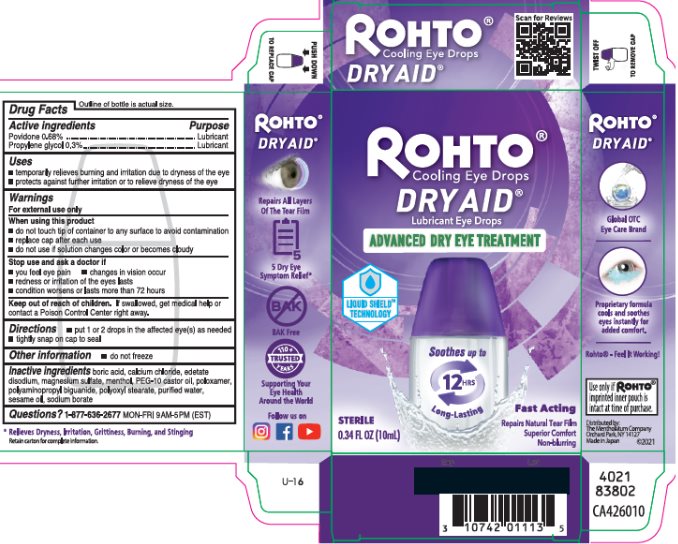
This recall covers Rohto Cooling Eye Drops Dry Aid (povidone 0.68%, with approximately 97201 cartons affected. The company behind the recall is Rohto-Mentholatum (Vietnam) Co., Ltd., based in Ho Chi Minh, N/A. The FDA describes the product as: “Rohto Cooling Eye Drops Dry Aid (povidone 0.68%, propylene glycol 0.3%), Sterile, 0.34 FL OZ (10 mL), Distributed by: The Mentholatum Company, Orchard Park, NY 14127, Made in Vietnam, UPC 310742011135, NDC 10742-8162-1”
Why was Rohto Cooling Eye Drops Dry Aid (povidone 0.68% recalled?
According to the FDA, the stated reason for the recall is: “Lack of Assurance of Sterility.” In plain terms, this recall relates to a sterility or contamination concern.
Sterile medicines, such as injectables and eye drops, must be completely free of microorganisms and stray particles. This recall means that sterility could not be assured or that contamination was found or suspected. Using a non-sterile product of this kind can cause infections, which is why these recalls are treated seriously.
What should you do?
If you think you may have bought Rohto Cooling Eye Drops Dry Aid (povidone 0.68%, compare it against the product description and identifying codes (Lot #: 4G1VA, Exp. Date 2027/06; 4J1VA, Exp. Date 2027/09; 5A1V, Exp. Date 2027/12; 5D1VA, Exp. Date 2028/03; 5G1VA, Exp. Date 2028/06; 512V, 512V, 512VB Exp.…) before using it. This recall is currently listed as ongoing.
The general guidance for a matching product is to stop using it and follow the instructions in the official FDA recall notice, which may include a repair, replacement, refund, or safe disposal. When in doubt, contact Rohto-Mentholatum (Vietnam) Co., Ltd. or your local health authority.
About this recall
This recall was distributed in N/A. RecallRadar summarizes recall information from public FDA data to make it easier to understand. We are an independent service and are not affiliated with the FDA or any government agency, so please always refer to the official source for the authoritative record — and note the “last synced” date shown on this page, since recall details can change over time.
Who this recall affects
This recall matters to anyone who bought Rohto Cooling Eye Drops Dry Aid (povidone 0.68%. Even if you feel fine, it's worth checking what you have on hand rather than assuming you were missed.
Distribution listed in the notice: Nationwide within the United States.
What sterility or contamination concern actually means
Sterile medicines, such as injectables and eye drops, must be completely free of microorganisms and stray particles. This recall means that sterility could not be assured or that contamination was found or suspected. Using a non-sterile product of this kind can cause infections, which is why these recalls are treated seriously.
In this case, the concern applies specifically to Rohto Cooling Eye Drops Dry Aid (povidone 0.68% from Rohto-Mentholatum (Vietnam) Co., Ltd. — not to the wider category of products. Similar items from other brands aren't part of this recall.
How to check whether you have it
On medicine bottles, the lot number and expiration date are printed on the pharmacy label or stamped directly on the manufacturer's bottle — often near the bottom edge or on the back. If a pharmacy label covers it, your pharmacist can look up the lot they dispensed.
Compare what you find against the identifying details in this recall: Lot #: 4G1VA, Exp. Date 2027/06; 4J1VA, Exp. Date 2027/09; 5A1V, Exp. Date 2027/12; 5D1VA, Exp. Date 2028/03; 5G1VA, Exp. Date 2028/06; 512V, 512V, 512VB Exp. Date 2028/08; 5L2VA, 512VB 2028/11.
What to do if you already bought it
Do not stop taking a prescribed medicine on your own because of a recall — for many conditions, an interrupted dose carries its own risk.
Instead, check the lot number against the details above and contact your pharmacist, who can confirm what they dispensed and arrange a replacement.
If you've had an unexpected reaction, contact your healthcare provider. Problems can also be reported to the FDA's MedWatch program.
Full recall details
- Status
- Ongoing
- Date reported
- July 29, 2026
- Recall started
- July 14, 2026
- Distributed in
- N/A
What you can do
Check whether any product you have matches the description and codes above. If it does, stop using it and follow the instructions in the official recall notice. When in doubt, contact the company or your local health authority.
Quick answers
Why was Rohto Cooling Eye Drops Dry Aid (povidone 0.68% recalled?+
According to the FDA: Lack of Assurance of Sterility
How serious is this recall?+
Class II — moderate. Using this product might cause a temporary or medically reversible health problem. The chance of serious harm is low.
What should I do if I have Rohto Cooling Eye Drops Dry Aid (povidone 0.68%?+
Compare your product against the description and identifying codes on this page. If it matches, stop using it and follow the instructions in the official recall notice — this usually means returning it for a refund or discarding it. When in doubt, contact the company or your local health authority.
Opens the U.S. Food and Drug Administration (FDA) data for this recall.
Recall number: D-0720-2026. Information last synced from the FDA on October 6, 2026.


